I want to start by saying that I bought renters insurance the way most people buy renters insurance: because our landlord required it, and because it cost less than a large pizza. I clicked through the quote in about eleven minutes during a nap, picked the cheapest plan that ticked the lease box, and forgot about it.
Then on a Tuesday night in early December, I walked into the twins' room to do my usual "are they breathing" check and stepped into a puddle.
What actually happened
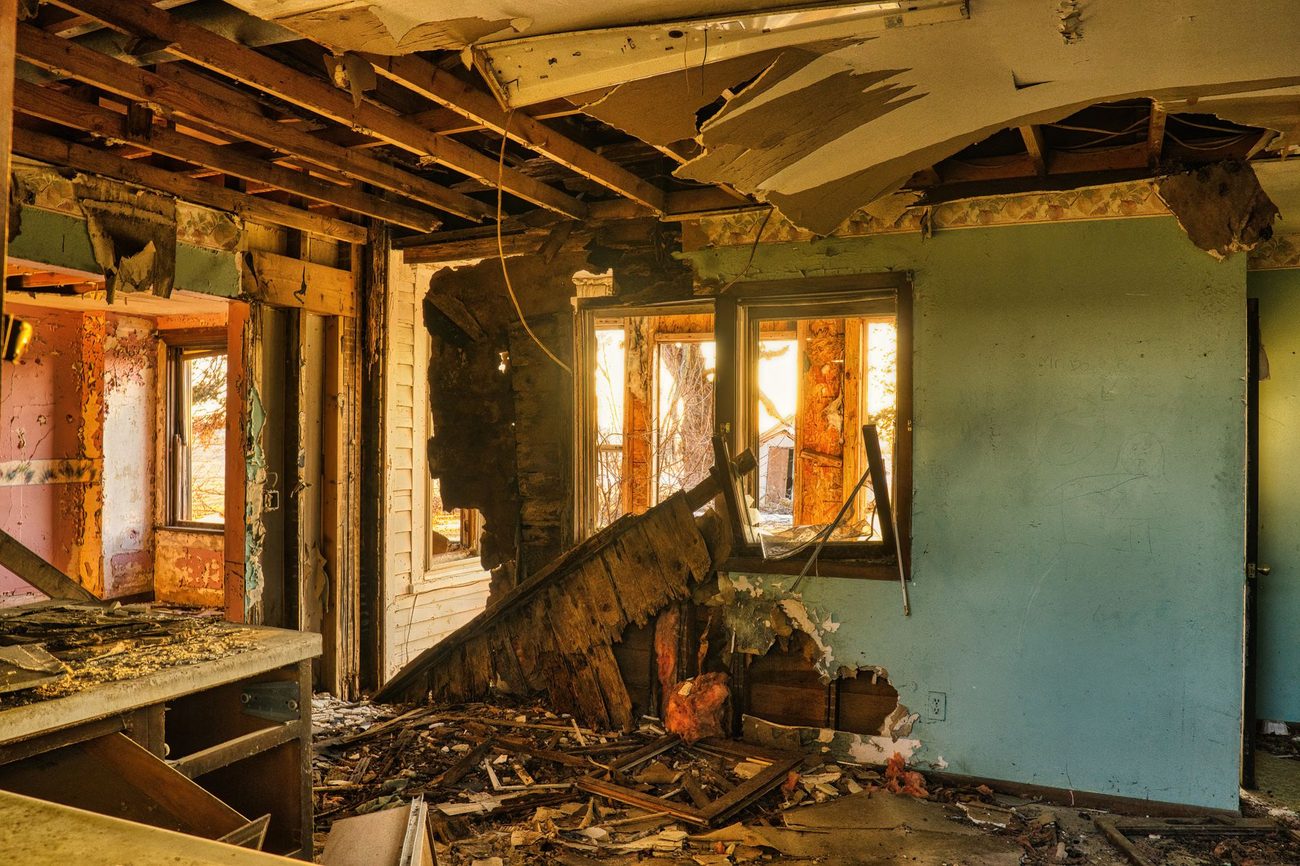
Our upstairs neighbor's water heater had failed sometime that evening. The water came down through the ceiling in the twins' room and along the wall into our hallway closet. By the time Dan found the shutoff and got our neighbor to open her door, there was a brown stain the size of a bath mat on the ceiling and about an inch of water pooled along one wall.
Theo and June, who were about 20 months old, slept through the entire thing. Dan and I did not sleep at all.
Here's what got damaged:
- The twins' rug (soaked, smelled like a wet dog within a day)
- One crib mattress that was directly under the drip
- A box of hand-me-down clothes in the closet, plus two winter coats
- Our vacuum, which lived in that closet and got water in the motor
- A bookshelf made of particle board that swelled up and basically turned to oatmeal
Who pays for what (this part confused me)
My first instinct was that the landlord or the neighbor would cover everything. That turned out to be only partly true. Our landlord's insurance covers the building: the ceiling, the drywall, the flooring. It does not cover our stuff. Our neighbor's renters policy might have covered us if she'd been negligent, but a water heater that just dies of old age isn't really anyone's fault.
So our belongings were on us. Which meant, for the first time, I actually read my policy.
What our policy covered
Our plan has $20,000 in personal property coverage, a $500 deductible, and something called "loss of use" coverage, which I had never heard of. It also pays for replacement cost rather than actual cash value, which turned out to matter a lot. Replacement cost means they pay what it costs to buy a new version, not what a three-year-old used crib mattress is worth on a resale site.
| Item | Claimed |
|---|---|
| Crib mattress | $160 |
| Rug | $140 |
| Vacuum | $230 |
| Bookshelf | $90 |
| Clothes and coats | $410 |
| Hotel, one night | $189 |
| Total | $1,219 |
After the $500 deductible, we got a little over $700 back. The hotel night was covered under loss of use because the room was unlivable while the fans ran, and I did not want two toddlers breathing wet drywall air.
The adjuster called me two days after I filed, asked for photos and receipts, and the money showed up about three weeks later. It was honestly less painful than returning something to a big-box store.
What wasn't covered
The box of hand-me-downs was a gray area. I had no receipts, obviously, because a friend gave them to us. The adjuster accepted a rough list with estimated values, but trimmed it down a bit. I didn't fight it.
And the deductible stung. $500 is a real number in our budget spreadsheet. If the damage had been only the rug and the mattress, it wouldn't have been worth filing at all.
What I'd do differently
- Take a video of every room once a year. Just walk through slowly and open the closets. I've now done this, and it took nine minutes.
- Keep digital receipts in one folder. I found the vacuum receipt in my email only because I searched the brand name. Now anything over about $75 gets a screenshot in a shared folder.
- Think about the deductible on purpose. A lower deductible costs a bit more each month. For us, a $250 deductible would have added about $3 a month. I'm still deciding.
- Don't store things on the closet floor. Everything in there is now on a shelf or in a lidded plastic bin.
How much it actually costs
Our policy is $14 a month. That's $168 a year. This one claim paid back about four years of premiums, not counting the hotel.
I'm not an insurance expert and your policy, state, and landlord situation may look completely different, so read your own declarations page and call your insurer with questions. But if you're a renter with kids and you've been thinking "we don't really own anything worth insuring," go add up what's in the nursery. Cribs, car seats, strollers, clothes they'll outgrow in four months. It adds up fast.
The ceiling has since been patched and painted. The twins are back in their room. I still check that corner every night, though. Probably forever.